

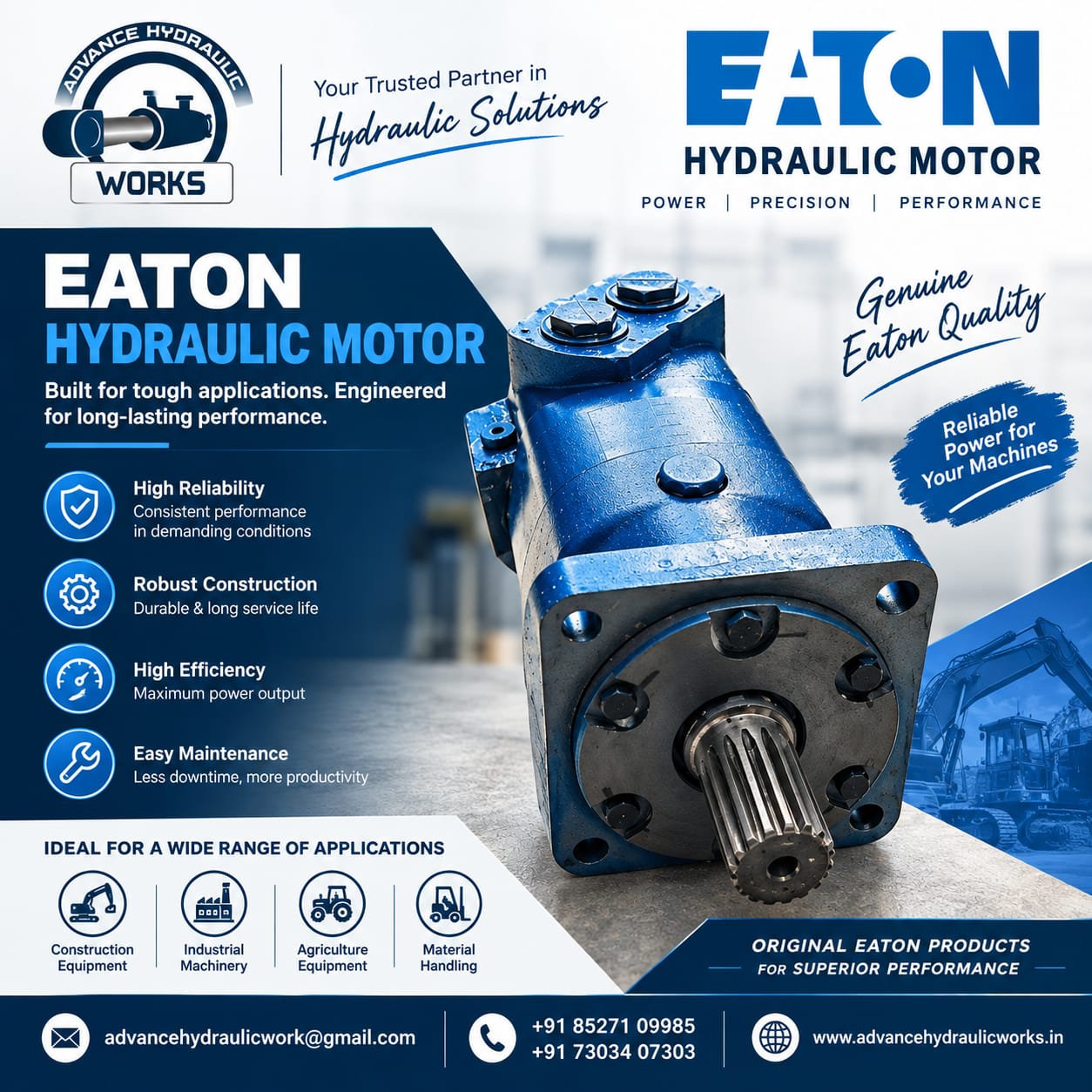
Eaton hydraulic motor installation:
A new motor
doesn't fail because it was badly made. More often it fails in the first few
hours because of what was left in the circuit or how it was fitted. If you're
replacing an Eaton hydraulic motor, these are the steps that decide whether it
lasts.
Why do new
motors fail soon after fitting?
Three causes
account for most early failures: dirt left in the lines, misalignment at the
shaft, and starting the motor under full load before it has settled in. None of
them are the motor's fault, and all of them are avoidable.
A worn motor
sheds metal particles into the oil. Fit a new motor onto that oil and the
particles score the new parts within hours. That's why the work before you
touch the new motor matters as much as the fitting itself.
Is the
process different for Char-Lynn and Vickers motors?
The principles are similar, but the
information is different. An Eaton Char-Lynn hydraulic motor and an Eaton Vickers hydraulic motor come from distinct product lineages, so the port
format, type of shaft, and conduit arrangement may differ Read the set up notes
on your actual version as opposed to imagining practicing the steps of a motor
of choice. If you do not have the documentation, ask your supplier for it when
ordering.
What should
you do before removing the old motor?
Find out why
it failed. If you replace a motor without fixing the cause, the new one follows
the old one. Look at the oil. Milky oil suggests water, dark burnt-smelling oil
suggests overheating, and glittering particles suggest internal wear.
Then do these checks:
1. Note the port positions and hose
routing, or photograph them.
2. Cap the open lines immediately so
nothing gets in.
3. Check the old shaft, coupling and
key for wear or damage.
4. Look at the mounting face for
damage or warping.
How do you
prepare the circuit?
Flush the
lines and replace the filter element before the new motor goes anywhere near
them. If the old motor failed with internal wear, the tank and lines will hold
debris that a filter change alone won't clear. Drain and clean the tank if the
oil looks contaminated.
Use the oil
grade your machine's manual specifies. Fill through a filter, not straight from
the drum, because new oil isn't always clean oil.
How do you fit the motor?
Work slowly
and keep everything clean.
1. Check the new motor against the
old one: mounting flange, shaft, port sizes and ports positions.
2. Clean the mounting face and
inspect the shaft for burrs.
3. Mount the motor square to the
machine. Don't force the coupling. A motor that has to be hammered on will run
misaligned and wear its bearings.
4. Fit hoses without twisting them,
and tighten fittings to the torque the manufacturer specifies.
5. If your motor has a separate case
drain port, connect it as the documentation says. A blocked or missing drain
line can damage the shaft seal.
How do you
start the machine for the first time?
Fill the
motor with clean oil through its ports where the manual allows, so it doesn't
run dry on first turn. Start at low speed and low pressure, without load, and
listen. Look for leaks at every fitting straight away.
Let it run
unloaded for a few minutes, then bring the load up in stages. Watch the oil
temperature. A motor that heats quickly on light load has a problem that will
only get worse under full duty.
What should you notice within the first week?
Recheck fittings for leaks after the
first few hours, as connections may persist. Check the
filter indicator, because a new circuit sometimes clears remaining debris in
the first days. Then change the filter again after the first period of running
if the machine's schedule allows it. It's a small cost compared with a second
motor.
Where does
Advance Hydraulic Works fit in?
Advance Hydraulic Works imports and
deals in hydraulic automobiles and pumps. This is not always the manufacturer,
so the beneficial aspect to do is to confirm the correct version in your
system, state clearly whether the unit is new or repaid, and point you to the
correct documentation for the fitting. Send your nameplate details and it can start there.
Frequently
asked questions
Why did my new Eaton hydraulic motor fail so
quickly? The most common causes are
contaminated oil from the old motor's failure, misalignment at the shaft, and
running under full load right after fitting. Check these before blaming the
motor.
Do I need to flush the system when replacing a
hydraulic motor? If the old motor failed from
internal wear, yes. Flush the lines and change the filter, because leftover
particles will damage the new motor.
Can I install an Eaton Vickers hydraulic motor the
same way as a Char-Lynn? The general
principles match, but ports, shaft and drain details differ between lineages.
Follow the documentation for your exact model.
How should I run in a new hydraulic motor? Start at low speed and low pressure with no load,
check for leaks, then increase the load in stages while watching oil
temperature.
Where can I get the installation details for my
motor model? Ask your supplier for the documentation when you order, and send the
full model code from the nameplate so they can point you to the right one.
