

Hydraulics is a branch of science that studies the practical applications of fluids in motion. It's based on the fact that you can't compress a liquid. In hydraulic systems, mechanical movement is produced by contained, pumped liquid, typically through hydraulic cylinders moving pistons.
Hydraulics is used to:
1. Lift and move objects with precise control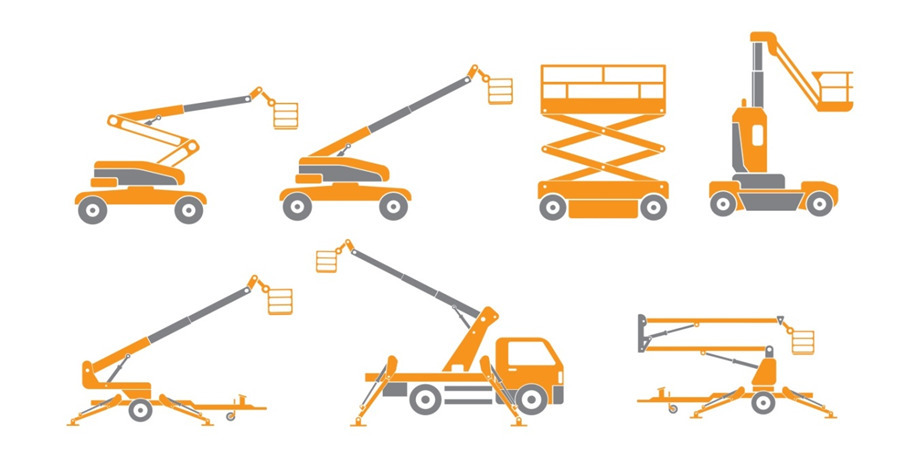
There are several tools that can lift and move objects with precise control, including:
- Hydraulic liftsThese lifts provide controlled and precise force. They are used in many industries.
- 360-degree jib cranesThese cranes have safety features that protect workers. They allow for precise control during lifting and lowering.
- CranesThese mechanical devices are used in construction, manufacturing, and logistics. They are designed to lift and transport heavy objects with precision and efficiency.
- Vacuum suction cupsThese tools are used in factories and workshops to lift and move heavy things. They work by sticking to the surface of an object and creating a vacuum.
2. Design dams
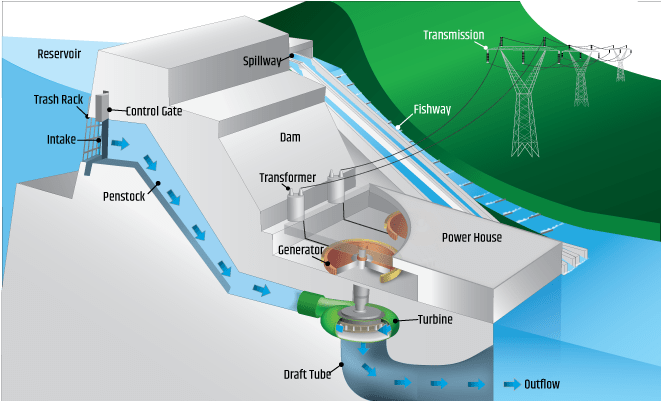
When designing a hydraulic dam, you can consider the following steps:
- Site selection
- Topographic surveys
- Water availability assessment
- Sizing and layout
- Geologic surveys and construction materials investigations
- Geologic evaluation of foundation, rim, abutment and pond area
- Dam section design
- Dam seepage and stability analysis
A gravity dam is designed to resist external forces like: Water pressure, Wind pressure, Wave pressure, Ice pressure, Uplift pressure.
The section of a gravity dam should be the most economical section that satisfies all the conditions and requirements of stability.
HydroSym software is a tool that can help you design hydraulic systems.
3. Control fluid circuitry

Fluid circuits use compressed air or hydraulic fluid as their operating medium. They can be controlled by different valves to control the direction, force, and speed.
There are three types of flow control circuits:
- Meter-in circuit
- Meter-out circuit
- Bleed off circuit
Valves can regulate the flow or pressure of the fluid. They can do things like:
- Stop and start the flow
- Control flow rate
- Divert flow
- Prevent backflow
- Control pressure
- Relieve pressure
Throttles and orifices are simple components that can control the flow rate. Pressure-compensated flow control valves are more complex and can keep the flow rate constant even with a variable load.
Common pressure control circuits in hydraulics include:
- Two-pressure circuit with decompression and check valves
- Decompression circuit
- Weight balancing circuit
4. Flow through pipes
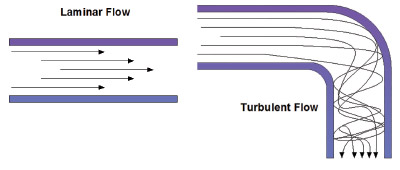
Hydraulic flow through pipes is the volume of water flowing through a pipe or channel per unit time. The flow rate is expressed as Q. The formula for the flow rate is:
- Q = dVdt = Av
- A: is the cross-sectional area of the pipe
- v: is the magnitude of the velocity
Hydraulic flow through pipes is subject to frictional losses. The friction coefficient is not constant and depends on the parameters of the pipe and the velocity of the fluid flow.
Flow through pipes can be classified as Laminar, Turbulent, or Transition.
The classification is based on the Reynolds number of the flow, which depends on the flow and pipe characteristics.
Hydraulic hose pipes are most often manufactured in Rubber, Thermoplastic, and Teflon.
They are expected to carry fluid under very high pressure.
Hydraulics topics include:
- Pipe flow
- Dam design
- Fluidics
- Fluid control circuitry
Hydraulic power is defined as flow multiplied by pressure. The formula is:
- Power = (P x Q) ÷ 600
- Power is in kilowatts [kW]
- P is the pressure in bars
- Q is the flow in liters per minute
