

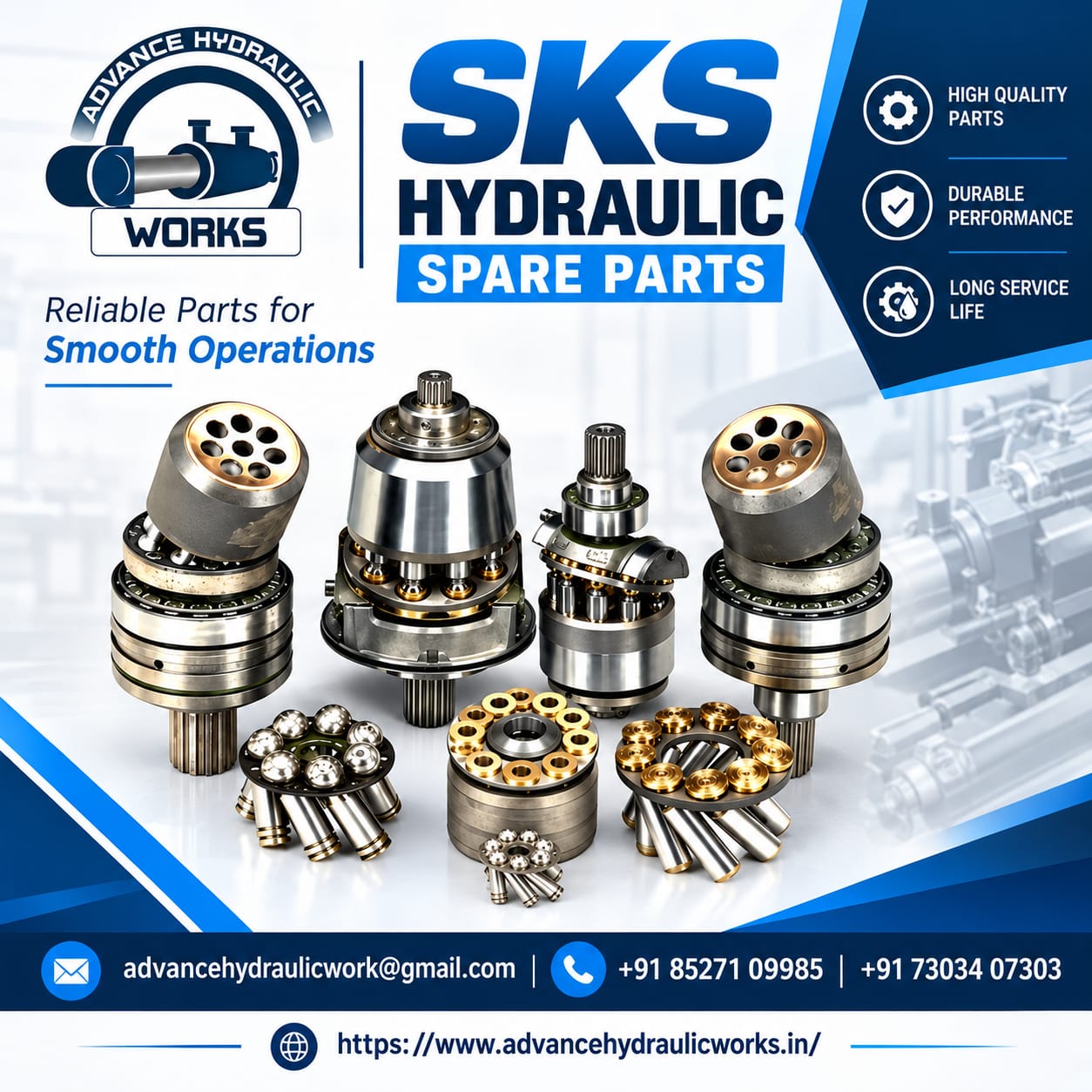
SKS hydraulic pump spare parts: which part fixes which problem
Most people order pump parts by guessing. The pump leaks, so they buy seals. It’s slow, so they buy a whole kit. Sometimes that works, and often it doesn’t. This guide matches common faults to the parts that actually cause them, so you buy what the pump needs. Advance Hydraulic Works imports and trades hydraulic pumps and parts from Delhi NCR, and this is the map we’d use when you call us.
What are you actually buying?
The maker, Saikesi, describes itself as a producer of hydraulic pumps, parts, gearboxes and gear motors, with a 170,000 square metre factory and over 10,000 types of hydraulic parts. Many of its piston pump series are sold as replacements for other makers’ models. One listing describes a series offered as a replacement for the A10VSO 31 series.
So before you search for SKS hydraulic pump spare parts, work out which pump you have and which model the part must fit. The name on the box isn’t enough.
The symptom-to-part map
Here’s a simple way to link a fault to a part. This is general piston pump logic, so check it against your own pump.
- Oil leaking at the shaft. Shaft seal, and possibly a scored shaft.
- Leak at the cover or port plate. O-rings and gaskets.
- Weak flow, hot oil. Piston shoes, cylinder block or valve plate wear.
- Noise or roughness. Bearings, ball guide or retainer plate.
- Pressure won’t hold. Control or compensator parts, plus rotating group wear.
- Metal in the oil. Serious internal damage, so strip fully.
A listing for one pump model shows the typical rotating set: a valve plate, cylinder block, ball guide, retainer plate, piston shoes and a swash plate.
SKS hydraulic pump parts: three tiers
It helps to sort parts into three groups.
Tier 1: consumables. Seals, O-rings, gaskets and bearings. These wear first and cost the least.
Tier 2: the rotating group. Cylinder block, pistons and shoes, valve plate, retainer plate and ball guide. Replace as a matched set when worn.
Tier 3: control and housing. Compensator, swash plate, shaft and housing. Replace when damaged, and check the cause first.
Most repair jobs touch Tier 1 for sure, Tier 2 if flow is weak and Tier 3 only after damage.
SKS hydraulic pump spares: what to keep on the shelf
For a machine that stops production when its pump fails, a small shelf of spares can turn a week-long wait into an afternoon job. Typical choices are a seal and O-ring kit, a set of bearings and, for critical pumps, a spare rotating kit.
These are illustrative made-up units, not real prices. Say a seal and bearing kit costs 5 units. A breakdown while you wait for parts takes 6 days, and each day of downtime costs 4 units, so 24 units in total. The kit pays for itself if the chance of a seal or bearing failure in that period is above about 21% (5 ÷ 24). For a pump that has run hard for years, that’s a reasonable bet. Advance Hydraulic Works can tell you what’s available once you send the model code.
The method: symptom, part, match
Symptom. Write down what’s wrong, in plain words, before you open the pump.
Part. Use the map above to list likely parts. Then confirm by inspection after teardown.
Match. Make the seller state which exact pump each part fits, and check the part against your old one.
A worked example
Say a pump suggests vulnerable waft and hot oil, but no leak. Teardown suggests scored piston shoes and a worn valve plate. The map points to Tier 2. You check a rotating kit list towards your teardown: valve plate, cylinder block, ball manual, retainer plate, swash plate and a fixed of piston shoes. If your pump has 9 pistons and the kit lists 9 footwear, the count matches. If it lists seven, it’s the wrong kit. Replace the matched set rather than simply the footwear, due to the fact a brand new part against a worn one wears speedy. This is an illustrative check, now not a spec sheet, so use your personal teardown information.
Implementation steps
- Write down the signs and symptoms before touching the pump.
- Photograph the pump, nameplate and every broken element after teardown.
- Note the whole model code, rotation and operating pressure.
- Match signs and symptoms to the stages above and make a components listing.
- Send photos and the list to Advance Hydraulic Works and ask what’s available.
- Ask the seller to state which pump every component fits and where it’s sourced.
- On shipping, evaluate every element with the old one before becoming.
- Clean the pump and tank, healthy the components, prime the pump and start at low strain.
The typical errors are ordering a whole kit when a seal might do, changing one component in a worn set and skipping the shipping test.
FAQs
What are SKS hydraulic pump spare elements?
They’re replacement additives for piston pumps: seals, bearings, rotating group components, manipulate elements and housings. Which ones you need depends on the fault and the pump model.
Which SKS hydraulic pump parts put on out first?
Seals, O-earrings and bearings normally cross first. Rotating organization parts wear more slowly, but they determine how nicely the pump provides flow.
Which SKS hydraulic pump spares should I keep in stock?
For a critical pump, keep a seal and bearing kit, and consider a spare rotating kit. Ask Advance Hydraulic Works what’s available for your model.
Can I replace just one worn part in the rotating group?
It’s usually better to replace the matched set, because new parts against worn ones wear quickly.
How do I know a part fits my pump?
Give the seller your full model code and ask them to state which pump the part fits. Then compare dimensions and counts with your old part on delivery.
Your next step
Photograph the nameplate and the damaged parts, write down the symptoms and send everything to Advance Hydraulic Works. You’ll know which parts to order before you spend anything.
