If you’re searching for hydraulic motors (or trying to replace one), you’re probably dealing with questions like:
- Why is my motor slow or jerky?
- Which motor type is right for my application—gear, vane, or piston?
- How do I choose the right size and pressure rating?
- What maintenance habits prevent premature wear?
This guide breaks down hydraulic motor technology in a practical, real-world way—so you can make confident decisions for equipment performance, reliability, and cost control.
> In India—especially in industrial hubs like New Delhi—hydraulic systems are widely used in construction equipment, machine tools, material handling, and industrial automation. Local support matters when uptime is critical, and many facilities rely on established hydraulics vendors for selection guidance and component-level help.
---
What Is a Hydraulic Motor?
A hydraulic motor converts hydraulic energy (pressurized fluid) into mechanical energy (rotational motion).
In simple terms:
- A hydraulic pump pushes fluid at a certain pressure and flow rate.
- That fluid flows into the motor.
- Inside the motor, pressure drives internal movement.
- The result is shaft rotation (torque + speed).
Key takeaway: Hydraulic motors are chosen not just for “speed,” but for the torque and load control they can deliver smoothly under varying conditions.
---
How Hydraulic Motors Generate Torque
Hydraulic motors operate based on pressure and displacement.
The two variables you’ll see everywhere
- Displacement (often in cc/rev or similar): how much fluid is used per revolution internally.
- Working pressure (in bar/psi): how much force the fluid can exert.
A motor with higher displacement typically produces more torque (all else equal), while operating at sufficient pressure.
Why this matters: If your system’s pressure is too low—or your flow is mismatched—the motor may become sluggish or overheat due to inefficiency.
---
Common Types of Hydraulic Motors (and When to Use Each)
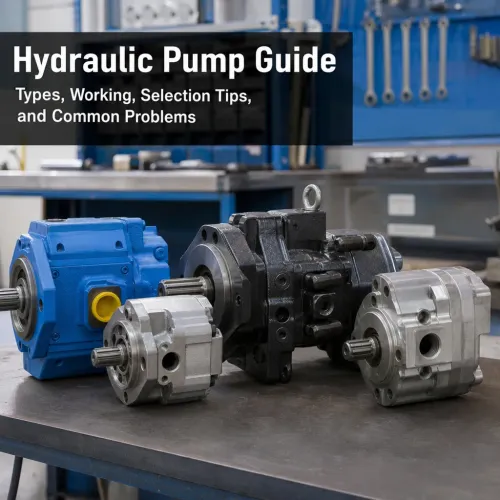
1) Gear Hydraulic Motors
How they work: Meshing gears rotate to generate motion.
Strengths:
- Simple design
- Good cost-to-performance for steady loads
Watch-outs:
- Typically less efficient under high pressure compared to advanced designs
- More sensitive to contamination (wear can accelerate)
Best fit: Conveyor drives, light-to-medium duty applications, and systems where filtration and fluid cleanliness are well managed.
---
2) Vane Hydraulic Motors
How they work: Sliding vanes (or rotor-stator vanes) create chambers that expand/contract as fluid moves through.
Strengths:
- Smooth torque delivery
- Often a good middle ground for efficiency
Watch-outs:
- Vanes can wear if contamination is present
- Performance can drop if seals and tolerances degrade
Best fit: Applications requiring smoother motion than many gear motors, like some industrial drives and material handling components.
---
3) Piston Hydraulic Motors (Axial or Radial)
How they work: Pistons and cylinders convert hydraulic pressure into rotation.
Strengths:
- High torque capability
- Better efficiency in many real-world conditions
- Often suitable for demanding duty cycles
Watch-outs:
- More sensitive to fluid cleanliness and correct maintenance
- Typically cost more upfront
Best fit: Heavy-duty drives, high-load machinery, and applications where efficiency and durability matter most.
---
Hydraulic Motor Speed vs Torque: The Real Trade-Off
A common misconception is that “a motor with X flow always runs at X speed.”
In practice:
- Speed is heavily tied to flow rate.
- Torque is tied to pressure and motor displacement.
- When the load increases, the system may draw more pressure, affecting speed if the pump/control strategy doesn’t compensate.
What you’ll observe
- Under higher load: speed may drop (normal behavior).
- If speed collapses too quickly: could indicate pressure relief behavior, internal leakage, or incorrect sizing.
- If the motor overheats: could indicate high internal friction, contamination, or excessive backpressure issues.
---
How to Choose the Right Hydraulic Motor (A Practical Checklist)
When selecting a hydraulic motor, engineers and maintenance teams often confirm these points:
1) Determine required torque and load profile
- Peak torque demands (not just average)
- Starting load vs running load
- Shock loads and reversing duty (if applicable)
2) Match the available flow rate
- Motor speed depends on flow
- Too little flow = under-speed and inadequate output
- Too much flow = overheating risk, seal stress, and wasted energy
3) Verify pressure ratings and system limits
- Ensure the motor’s maximum pressure is compatible
- Check relief valve settings
- Confirm whether frequent pressure spikes occur
4) Confirm rotational direction and control needs
- Some systems need reversing
- Consider whether directional control valves and hoses support required response
5) Fitment details
- Mounting pattern
- Shaft type and output coupling
- Port orientation and hydraulic connections
6) Fluid quality and filtration standards
Hydraulic motors are not forgiving about contamination.
- Particles cause abrasive wear
- Dirty fluid leads to internal leakage and reduced efficiency
If you don’t know your filtration level, treat it as a selection factor—not an afterthought.
---
Signs Your Hydraulic Motor Needs Attention (Before Failure)
Here are common symptoms and what they may indicate:
Slow operation or “stuttering”
Possible causes:
- Low system pressure
- Low flow due to pump/valve restriction
- Internal leakage (worn components)
- Air ingestion or cavitation
Excessive noise or vibration
Possible causes:
- Contaminated fluid
- Cavitation due to insufficient inlet conditions
- Misalignment in coupling
- Worn bearings or internal damage
Overheating
Possible causes:
- Wrong oil viscosity for operating temperature
- Contaminated or degraded fluid
- High internal leakage
- Too much backpressure
Oil leaks at seals
Possible causes:
- Seal wear from contamination
- Shaft wear
- Improper installation or damaged O-rings
---
Maintenance Tips That Directly Extend Hydraulic Motor Life
Keep filtration and cleanliness under control
- Use correct filters for your system
- Replace filters on schedule
- Avoid “temporary” bypassing of filter elements
Monitor temperature and fluid condition
- Temperature spikes often correlate with inefficiency or blockage
- Regularly check oil clarity and change intervals
Inspect for air leaks and inlet restrictions
- Cavitation can damage internal surfaces rapidly
- Pay attention to suction-side hoses, strainers, and fittings
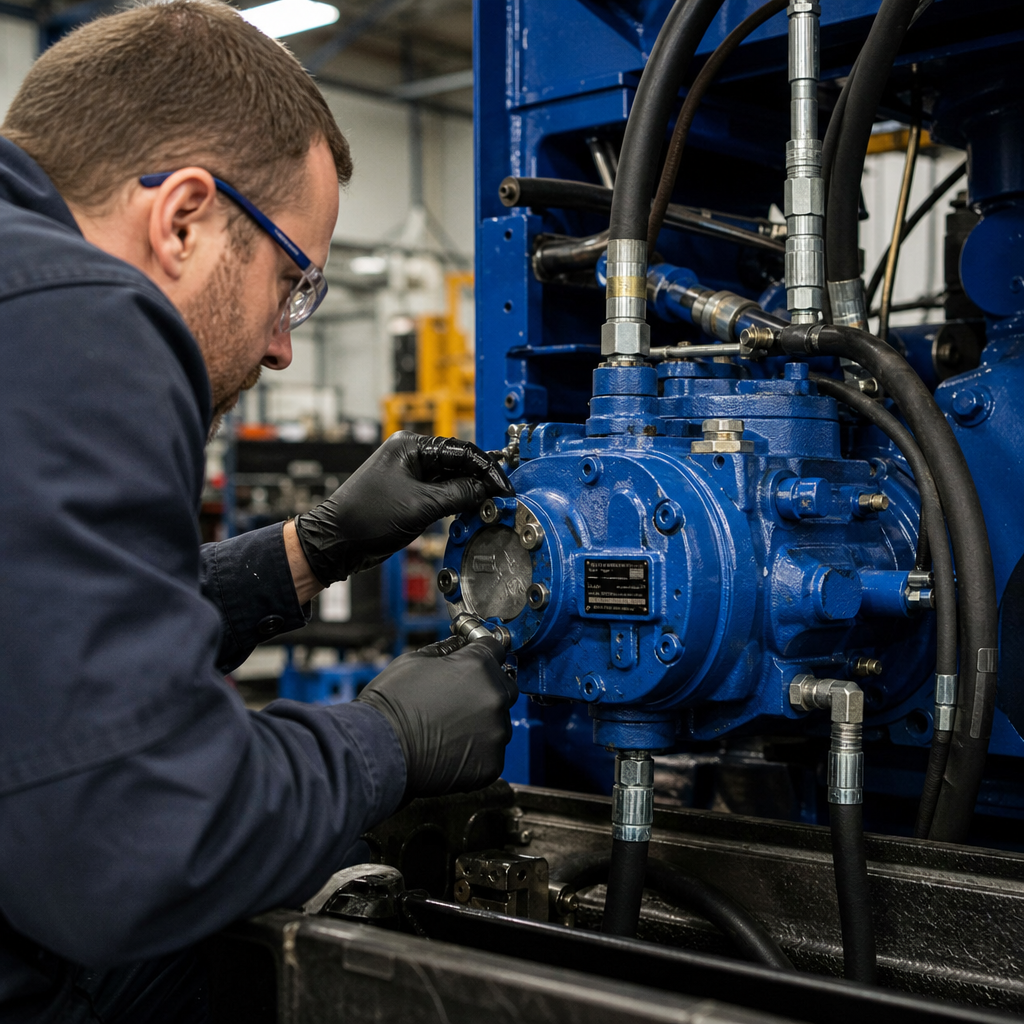
Ensure correct alignment during installation
Even small misalignment can cause bearing wear and premature failure.
---
Common Mistakes When Replacing a Hydraulic Motor
1. Choosing based only on shaft size
- You also need displacement, pressure rating, flow compatibility, and mounting standards.
2. Ignoring system pressure and pump behavior
- A motor may be technically “the same model,” but still fail if control settings differ.
3. Replacing the motor without addressing fluid contamination
- The new motor can wear quickly if the root cause isn’t fixed.
4. Overlooking backpressure and return line design
- Backpressure affects volumetric efficiency and seal life.
5. Using incorrect fluid viscosity
- Viscosity directly impacts leakage, friction, and heat generation.
---
Where Hydraulic Motors Are Commonly Used
Hydraulic motors are a core component in equipment where controllable torque and variable speed matter, such as:
- Construction equipment drives and attachments
- Material handling systems (conveyors, winches, lift drives)
- Machine tools and industrial automation
- Hydraulic power packs and industrial test rigs
- Mobile equipment requiring robust power transmission
If you’re troubleshooting a specific machine, the load profile (steady vs cyclic, start/stop frequency, and shock loads) usually determines the motor type more than any single specification.
---
A Local Note: Getting the Right Motor in New Delhi
If you’re operating in or around New Delhi, it helps to work with suppliers who understand real machine conditions—fluid type, filtration realities, and uptime constraints. For example, teams at Advance Hydraulic Works (linked to decades of hydraulic design and manufacturing experience) are often consulted for hydraulic motor selection and practical component-level guidance, including scenarios where repairs and matching are needed rather than simple “replacement by guesswork.”
(You don’t have to replace parts blindly—proper matching and troubleshooting can prevent repeat failures.)
---
Quick Summary: Choosing and Protecting Your Hydraulic Motor
- Choose the motor based on torque + flow + pressure + duty cycle
- Maintain hydraulic cleanliness with correct filtration
- Watch for early warning signs: noise, overheating, stuttering, leaks
- Avoid replacement mistakes—address root causes, not only symptoms
---
If you tell me your application (machine type), the pump flow, system pressure, and the motor’s current specifications (or photo/part number), I can help you narrow down the most likely motor type and what checks to prioritize before ordering or repairing.