A hydraulic pump is the “heart” of many hydraulic systems—responsible for moving pressurized fluid that powers cylinders, motors, presses, and industrial machinery. If your machine is underperforming, making unusual noise, or not building pressure consistently, the pump is often the first component to investigate.
This guide breaks down how hydraulic pumps work, the main types, what to consider when selecting one, and the most common failure symptoms—so you can make smarter decisions and reduce downtime.
---
What a Hydraulic Pump Does (In Simple Terms)
A hydraulic pump converts mechanical power (from an electric motor, engine, or gearbox) into hydraulic flow.
In most systems, the pump:
- Draws hydraulic fluid from the tank/reservoir
- Pressurizes the fluid by reducing volume and forcing flow into the circuit
- Sends the pressurized fluid to valves and actuators (cylinders/motors)
Key takeaway:
- Flow rate determines how quickly an actuator moves.
- Pressure determines how much force the actuator can generate.
---
How a Hydraulic Pump Works (Core Principle)
Most hydraulic pumps use a moving mechanism to trap fluid and then push it into the discharge side.
While the internal design differs by type, the process typically includes:
1. Inlet (suction): fluid enters the pump chamber
2. Compression/Displacement: trapped fluid is forced into a smaller volume
3. Outlet (discharge): pressurized flow is sent to the hydraulic circuit
Because pumps create pressure by resisting flow, system design (valves, relief settings, filters, and hoses) strongly affects pump health.
---
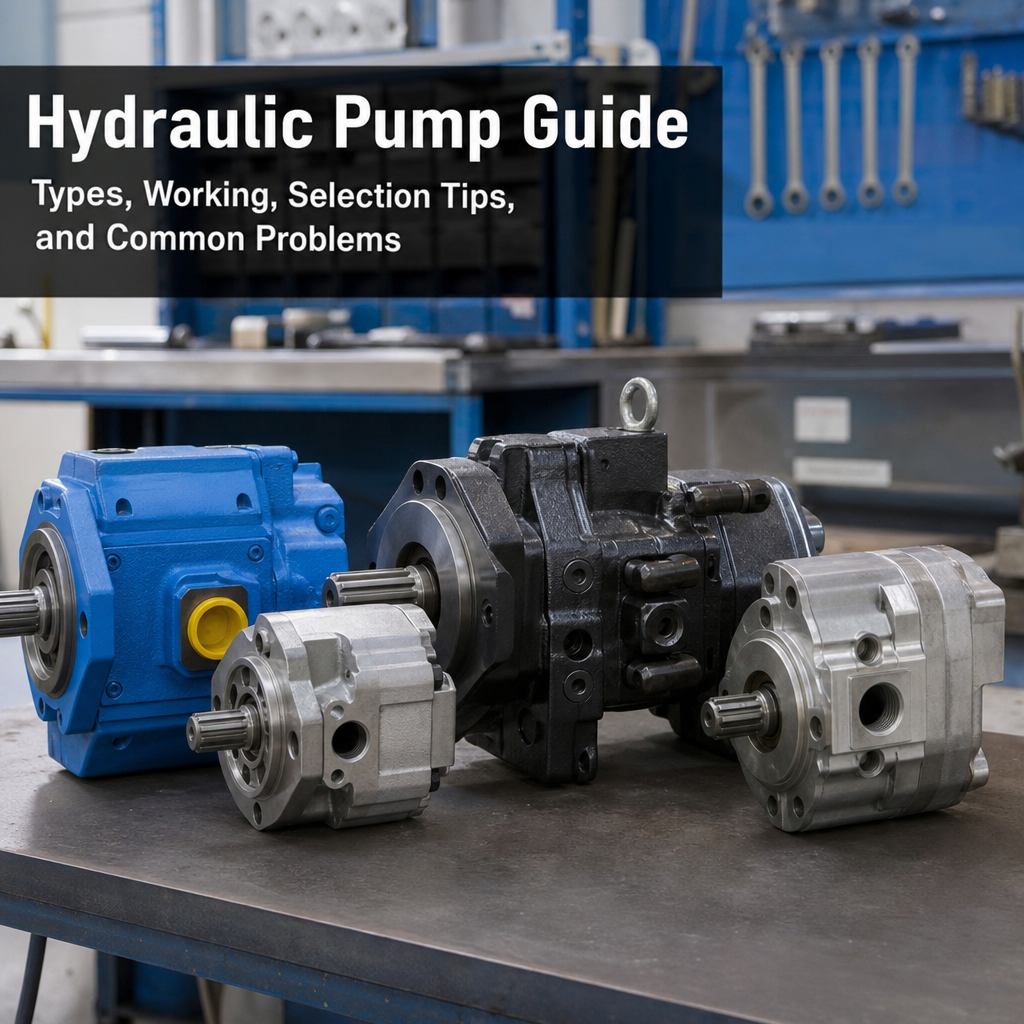
Main Types of Hydraulic Pumps (And Where They’re Used)
#### 1) Gear Pumps
How they work: Two gears mesh and carry fluid from inlet to outlet.
Strengths:
- Simple design
- Cost-effective
- Good for lighter-duty hydraulic applications
Limitations:
- Less efficient at higher pressures compared to other types
- Can be sensitive to contamination
Common uses: industrial lubrication units, general hydraulic systems, transfer pumps.
---
#### 2) Vane Pumps
How they work: Sliding vanes move inside a rotor, trapping and transferring fluid.
Strengths:
- Smoother flow than gear pumps (often)
- Good efficiency in certain duty cycles
Limitations:
- Wear can occur if filtration is poor
- Performance can vary with viscosity and operating conditions
Common uses: mobile hydraulics, systems requiring relatively smooth operation.
---
#### 3) Piston Pumps (Axial/Radial)
How they work: Pistons create high-pressure displacement by reciprocating within a cylinder block.
Strengths:
- Best suited for high pressure and demanding duty cycles
- High efficiency
- Strong performance across varying speeds (depending on design)
Limitations:
- More expensive
- Requires clean fluid and careful maintenance
Common uses: presses, heavy industrial hydraulics, high-force machines.
---
#### 4) Hydraulic Pump with Variable Displacement (Systems-Level Choice)
Variable displacement pumps adjust flow to match demand.
Why it matters:
- Less energy wasted
- Better control of speed/position
- Reduced heat generation (often)
Common uses: applications with frequent load changes, like presses, injection equipment, and mobile hydraulic machinery.
---
Fixed vs Variable Displacement: Which One Do You Need?
- Fixed displacement pump: outputs a constant flow (at a given RPM). Great for steady-duty cycles.
- Variable displacement pump: adjusts flow based on system demand—ideal when load and operating conditions change.
If your operation involves repeated “fast move / hold / slow move” patterns, variable displacement can improve efficiency and control.
---
How to Select the Right Hydraulic Pump
When choosing a pump, don’t focus on horsepower alone. Selection should be based on system requirements.
#### 1) Determine Required Flow Rate (Q)
Flow depends on:
- Cylinder bore and rod diameter (if actuating cylinders)
- Stroke speed
- Number of simultaneous actuators
#### 2) Determine Required Pressure (P)
Pressure depends on:
- Load force
- Mechanical advantage and geometry
- Friction losses
- Relief valve settings and circuit design
#### 3) Match the System Type
- Is the pump driving a cylinder, hydraulic motor, or a press mechanism?
- Does the system need smooth modulation, or is it mainly on/off?
#### 4) Check Fluid Requirements
Hydraulic pump performance depends heavily on:
- Viscosity range
- Fluid cleanliness level
- Temperature stability
#### 5) Confirm Drive and Speed
Pump displacement and flow output depend on RPM and internal design. Ensure:
- Correct coupling and alignment
- Compatible drive torque
- Speed rating within design limits
---
Common Hydraulic Pump Problems (Symptoms and Causes)
Here are frequent issues operators notice—plus what usually causes them.
#### 1) Low Pressure or Slow Actuation
Possible causes:
- Worn pump internals
- Air ingestion / suction leaks
- Clogged filters or restricted suction line
- Relief valve misadjustment
#### 2) Excessive Noise (Whine, Rattle, Grinding)
Possible causes:
- Cavitation (low inlet pressure or restrictions)
- Incorrect fluid viscosity
- Loose suction connections or air bubbles
- Gear/vane/piston wear
#### 3) Air in the System (Foaming, Bubbles, Whistling)
Possible causes:
- Suction-side leak
- Low reservoir level
- Damaged hoses, seals, or fittings
- Poor fluid aeration control
#### 4) Overheating / Rapid Temperature Rise
Possible causes:
- Relief valve constantly dumping pressure
- High contamination causing internal friction
- Wrong viscosity or poor cooling
- Pump operating at a mismatch speed/load
#### 5) Fluid Leaks Around Pump Seals or Shaft
Possible causes:
- Worn seals
- Damaged shaft surface
- Incorrect installation
- Misalignment or bearing wear
---
Prevention: Simple Practices That Extend Pump Life
Many pump failures are avoidable with consistent routine checks.
- Use proper filtration and replace filters on schedule
- Keep suction conditions clean (avoid clogged strainers)
- Maintain correct fluid level and check for air leaks
- Use the correct fluid viscosity for operating temperature
- Don’t override relief settings to “make it stronger”—this can overwork the pump
- Monitor noise and temperature early (don’t wait for total failure)
---
Troubleshooting Checklist (Quick Start)
If you suspect a hydraulic pump problem, a practical first approach is to verify:
- Does the system build pressure normally under load?
- Are there signs of air (foam, bubbles, hiss)?
- Are filters clean and differential pressure within range?
- Is the inlet line properly sized and free from restrictions?
- Does the temperature rise faster than usual during operation?
- Is there any unusual noise at start-up or under load?
This helps determine whether the issue is pump-related or caused by suction restrictions, contamination, valve faults, or relief settings.
---
Where Hydraulic Pumps Are Used in Real Life
Hydraulic pumps power a wide range of equipment, including:
- Hydraulic press machines and industrial forming equipment
- Material handling systems
- Hydraulic motors for rotational drives
- Power packs used in clamps, lifting systems, and industrial tools
In industrial setups, pump condition often reflects the quality of filtration, fluid care, and operating discipline—so preventive habits matter as much as the pump itself.
---
A Practical Note for Local Buyers in New Delhi
If you’re sourcing or maintaining hydraulic equipment in New Delhi, working with a supplier that understands pump design and hydraulic components (including seals and related parts) can reduce trial-and-error—especially when you’re dealing with repeated failures or compatibility questions.
---
Final Thoughts
A hydraulic pump isn’t a one-size-fits-all component. The best choice depends on flow demand, pressure requirement, fluid conditions, drive speed, and system control needs. When you understand pump types and common failure patterns, you’ll diagnose problems faster and avoid unnecessary replacements.
If you’re trying to identify what pump type or specifications match your machine, tell me your application (press type or hydraulic circuit), approximate pressure/flow, and what symptoms you’re seeing—I can help narrow down likely causes and the right selection criteria.