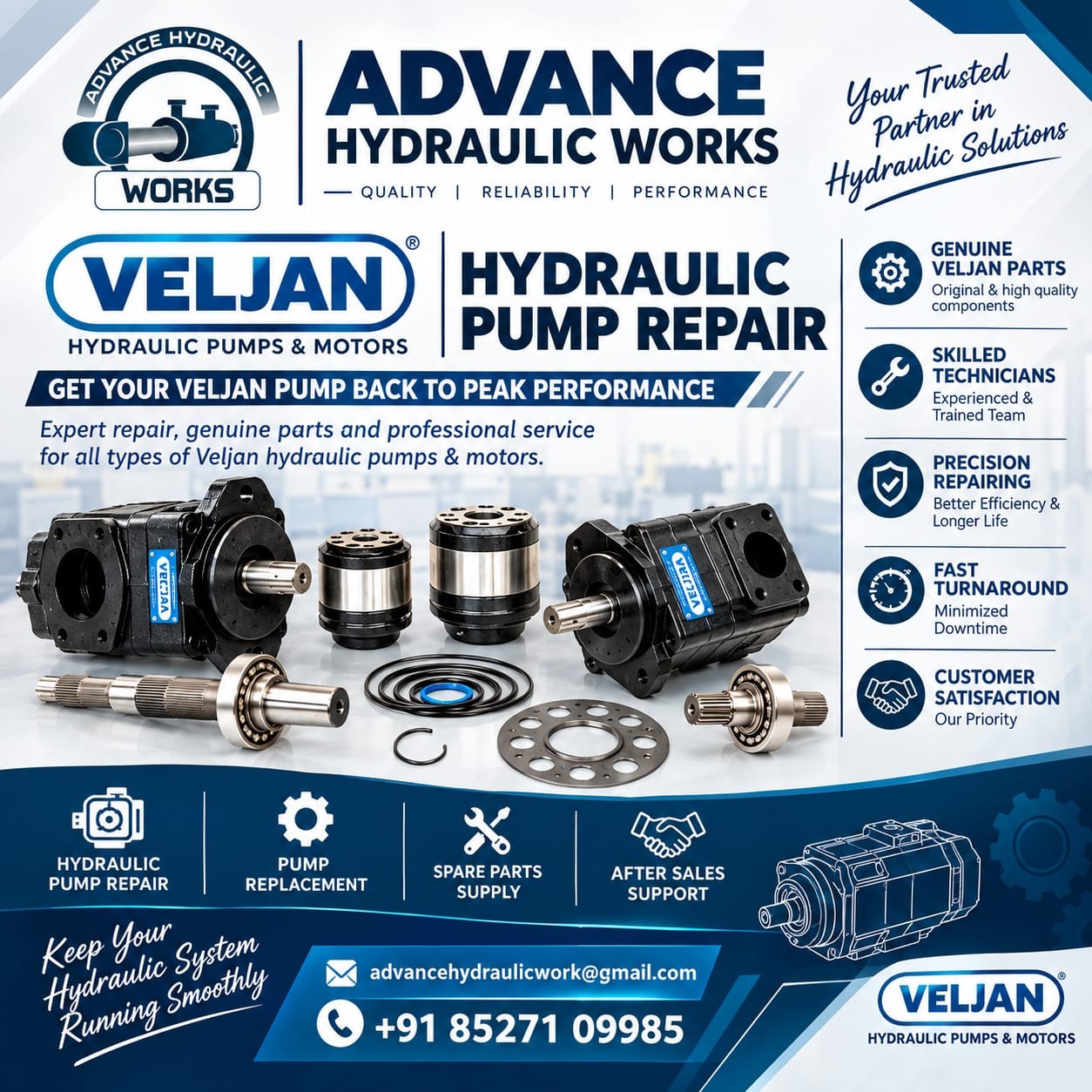
Chennai's manufacturing belt runs hard — auto components, heavy
fabrication, textile machinery — and that means hydraulic systems take a
beating. If you're searching for Veljan hydraulic pump repair in Chennai,
you're probably already seeing warning signs: pressure drops, overheating,
unusual noise, or a pump that just won't hold load anymore.
Why Veljan Pumps Fail in
Chennai's Conditions
Chennai's humidity accelerates seal degradation, and dust from
industrial zones like Ambattur, Guindy, and Sriperumbudur works its way into
hydraulic fluid faster than in drier climates. Two failure patterns show up
most often:
Veljan Vane pump repair in Chennai cases usually trace back
to worn vanes and cartridge assemblies — a natural result of contaminated oil
cycling through tight tolerances. Symptoms include erratic pressure, whining
noise, and slow actuator response.
Veljan Denison pump repair in Chennai requests more often
involve piston and swash-plate wear, since Denison-series pumps run at higher
pressures and punish any lapse in fluid cleanliness. Here, symptoms lean toward
gradual power loss and rising fluid temperature.
Methodology: How a Proper
Repair Should Go
1. Diagnosis
first — pressure testing, fluid sampling, and noise/vibration checks before
opening the pump. Guessing wastes money.
2. Teardown
and inspection — every wear component (vanes, cam rings, pistons, valve plates, seals)
checked against OEM tolerances, not just "reused if it looks fine."
3. Genuine
or precision-matched parts — mismatched components are the single
biggest cause of repeat failures.
4. Bench
testing under load — a repaired pump should be tested at working pressure before it goes
back on the machine, not just spun free.
5. Root-cause
fix — if contamination caused the failure, the filtration or reservoir
issue needs fixing too, or the repair won't last.
This is the exact sequence Advance Hydraulic Works follows for
every repair job, whether it's a routine vane rebuild or a full Denison piston
overhaul.
A Real-World Example
A Chennai auto-ancillary unit brought in a Veljan Vane pump showing
pressure fluctuation under load. Root cause: degraded vane tips from unfiltered
fluid, not a bad pump design. Rebuild with cleaned system and fresh filtration
restored full pressure and prevented a second failure within weeks — the usual
outcome when only the pump, not the cause, gets fixed.
Implementation Steps for
Plant Teams
- Flag
pressure or noise changes early, before catastrophic failure
- Send
an oil sample along with the pump for accurate diagnosis
- Ask
for a written failure-cause report, not just a repair invoice
- Schedule
preventive fluid/filter checks every 3–6 months
Advance Hydraulic Works handles pickup, diagnosis, and repair for
Chennai units, with genuine components and tested turnaround — reducing repeat
breakdowns rather than just patching symptoms.
FAQs
Why Is My Hydraulic Pump Leaking?
Leaks usually come from worn seals, damaged O-rings, or a cracked housing from
age or over-pressurization. Fluid contamination speeds up seal wear
significantly.
How Long Should a Hydraulic Pump Last?
With clean fluid and routine maintenance, industrial pumps like Veljan Vane and
Denison units typically run 10,000–20,000 hours before major rebuild — far less
if contamination or overheating goes unchecked.
What Causes Hydraulic Pump Failure?
The top causes are contaminated fluid, cavitation from low fluid levels,
overheating, and misaligned couplings. Most failures are preventable with
regular fluid analysis and timely servicing.