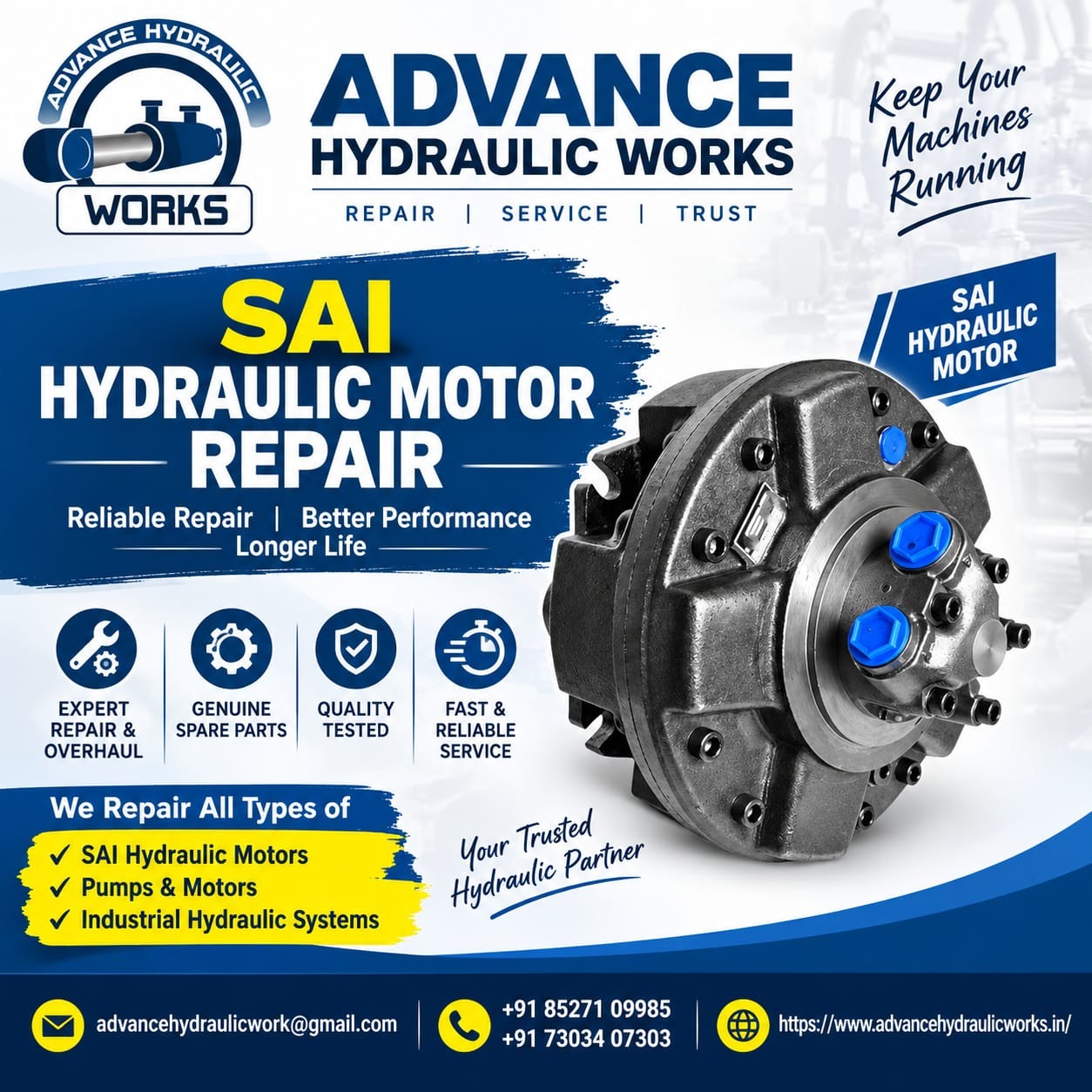
SAI
Hydraulic Motor Repair: SAI Hydraulic Motor Repair: What usually fails and the
way a proper restoration shop handles it
Most people don't remember a hydraulic motor until it starts costing them their downtime. If you run SAI hydraulic motors on excavators, cranes, or industrial machinery, an already installed grip is the difference between a same-week restoration and a full motor option. Here's what to actually watch for.
Signs your SAI hydraulic motor needs attention
A motor rarely fails without warning. The usual pattern is a slow drop in performance that gets ignored until it's a shutdown. Watch for sluggish or uneven rotation, especially under load. Listen for grinding or whining that wasn't there a month ago. Check for oil leaking around the shaft seal or case drain line — even a small weep usually means internal seal wear that's only going to get worse. If the machine is pulling more hydraulic pressure than usual to do the same job, that's the motor's efficiency dropping, and it's worth a diagnostic before it seizes on you mid-shift.
Why SAI hydraulic motor repairing service matters more than replacement
Buying a new motor isn't always the smart move. A lot of SAI motor failures come down to contaminated oil, worn bearings, or a scored cylinder block — parts that a competent repair shop can rebuild without touching the housing. A proper SAI hydraulic motor repairing service will strip the unit, inspect the internals under real tolerances, and only replace what's actually damaged. That usually costs a fraction of a new unit and gets equipment back to spec, not just running.
What to look for in a repair center
Not every shop that says it can "fix hydraulics" should be trusted with a precision motor. A real SAI hydraulic motor repair center should have OEM-spec tooling for testing displacement and flow after the rebuild, genuine or properly matched seal kits, and technicians who've actually worked on radial and axial piston motors, not just gear pumps. Ask whether they test the motor under load before it goes back to you — a shop that skips this step is guessing, not repairing.
At Advance Hydraulic Works, this is the whole approach: strip it down, find the actual failure point, rebuild to original tolerances, and test before handover. We've seen enough SAI motors come in with the same three or four failure patterns to know that guessing rarely fixes anything twice.
FAQs
How do I know if my hydraulic motor is failing?
Look for slower or jerky operation, unusual noise, increasing oil temperature, or visible leaks around the seal. Anyone like this should have his or her personal short — or more together it’s usually time to check out the method.
What is the average life of a hydraulic motor?
With smooth oil and simple renewals most commercial water motors run eight,000 to twelve,000 hours earlier than desired for rebuild
Why is my hydraulic motor making noise?
Often cavities from low fluid or air inside the line, worn bearings, or internal wear will let components knock into opposition to each other Look for slower or jerky operation, unusual noise, rising oil temperature, or visible leaks around seals.